

Description
Non-Standard Aluminum CNC Turning Parts
Non-standard aluminum CNC turning parts are custom-designed, precision components manufactured according to specific drawings or samples rather than standard specifications. Produced using advanced CNC lathes and turning centers, these parts are ideal for applications that require unique geometries, tight tolerances, and high performance.
Key Features
- Custom Manufacturing – Fully tailored to your design, dimensions, and functional requirements
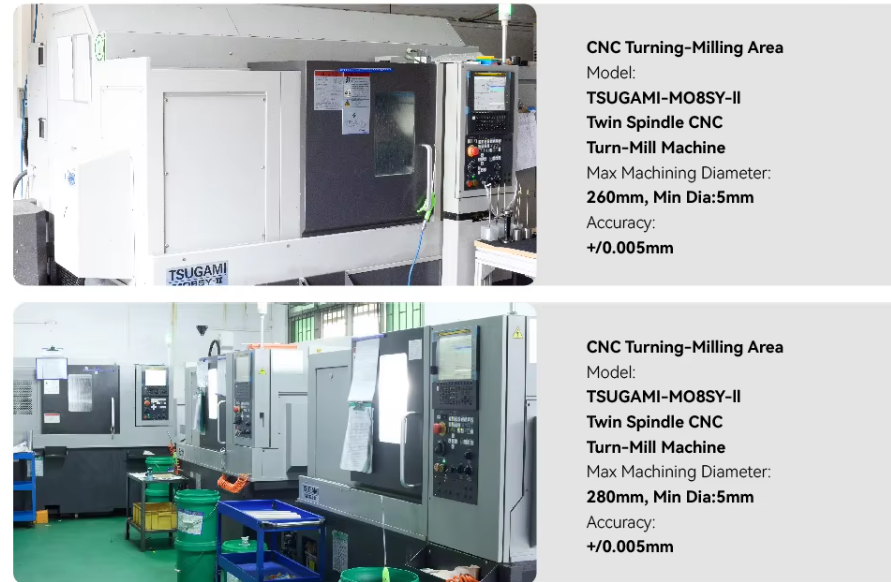
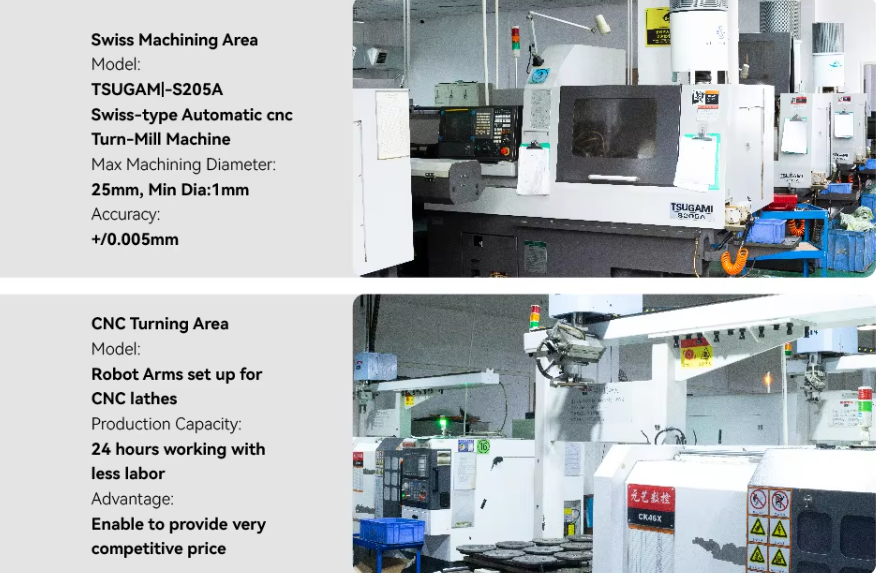
- High Precision – Tight tolerances up to ±0.005 mm for critical applications
- Lightweight & Strong – Aluminum offers an excellent strength-to-weight ratio
- Corrosion Resistance – Naturally resistant to oxidation, ideal for harsh environments
- Excellent Machinability – Enables high-speed production with consistent quality
- Smooth Surface Finish – Suitable for anodizing, polishing, and other treatments
Manufacturing Process
- Material Selection (e.g., 6061, 6063, 7075 aluminum alloys)
- CNC Turning – Precision shaping of cylindrical features
- Secondary Machining – Milling, drilling, tapping, or knurling
- Surface Finishing – Anodizing, sandblasting, polishing, etc.
- Quality Inspection – Dimensional and surface checks
Common Applications
- Automotive components (housings, bushings, connectors)
- Aerospace parts (lightweight structural components)
- Electronics (heat sinks, enclosures)
- Industrial equipment (precision shafts, fittings)
- Medical devices (custom aluminum parts)
Surface Finishing Options
- Anodizing (clear, black, colored)
- Sandblasting (matte texture)
- Polishing (smooth or mirror finish)
- Brushed Finish (satin texture)
- Powder Coating (durable color coating)
Advantages of Aluminum for CNC Turning
- Lightweight yet durable
- Easy to machine and cost-effective
- Good thermal and electrical conductivity
- Recyclable and environmentally friendly
How Do You Get Custom Aluminum Turning Parts?
Many industries rely on lightweight and strong components. Custom aluminum turning parts are a perfect fit. But how do you go from an idea to a precisely machined aluminum part?
Getting custom aluminum turning parts involves a meticulous process starting with design, material selection, and precision CNC turning. It requires choosing the right aluminum alloy, optimizing machining parameters for efficiency and surface finish, and implementing stringent quality control to produce components that meet exact specifications for strength, weight, and function.
What Makes Aluminum a Top Choice for Turning Parts?
With many materials available, why choose aluminum for turned parts? Its properties offer significant advantages for a wide range of applications.
Aluminum is a top choice for turning parts due to its exceptional strength-to-weight ratio, excellent machinability, and inherent corrosion resistance. Its high thermal and electrical conductivity, combined with its ability to accept various surface finishes, makes it ideal for components where performance and weight are critical.
What are the Key Advantages of Aluminum for CNC Turning?
Aluminum has several properties that make it ideal for CNC turning. I leverage these properties. This helps create high-quality, functional parts.
| Advantage | Description | Common Applications |
|---|---|---|
| High Strength-to-Weight Ratio | Provides excellent strength with minimal weight. | Aerospace, automotive, drone parts, portable electronics. |
| Excellent Machinability | Easy to cut, drill, and turn, leading to faster production and lower costs. | Prototypes, intricate shafts, housings, connectors. |
| Corrosion Resistance | Naturally forms a protective oxide layer, resisting rust and corrosion. | Outdoor equipment, marine components, food processing. |
| High Thermal Conductivity | Efficiently dissipates heat. | Heat sinks, electronic enclosures, engine components. |
| High Electrical Conductivity | Efficiently conducts electricity. | Electrical connectors, busbars, power distribution components. |
| Recyclability | Highly recyclable without significant loss of properties. | Environmentally conscious manufacturing. |
| Versatile Finishing Options | Can be anodized, polished, painted, or powder coated. | Decorative parts, durable surfaces, aesthetic appeal. |
Just saying "aluminum" is not enough. There are many different aluminum alloys. Each has unique properties. Choosing the right one is crucial for performance and manufacturability.
Selecting the right aluminum alloy for custom turning parts involves evaluating specific requirements for strength, hardness, weldability, corrosion resistance, and machinability. Different alloys offer varied balances of these properties, impacting both the turning process and the final part's performance and cost.
What are Common Aluminum Alloys for CNC Turning?
Several aluminum alloys are frequently used in CNC turning. I select the best one based on the part's needs. These are some of the most common types.
| Aluminum Alloy | Primary Characteristics | Typical Applications |
|---|---|---|
| 6061-T6 | Very good strength, good machinability, excellent corrosion resistance, weldable. | Structural components, bicycle frames, automotive parts, general purpose. |
| 7075-T6 | High strength (comparable to steel), good fatigue resistance, poor weldability. | Aerospace components, high-stress parts, sporting goods. |
| 2024-T3/T4 | High strength, good fatigue resistance, not ideal for welding. | Aircraft structures, fasteners, military applications. |
| 5052-H32/H34 | Good formability, excellent corrosion resistance (especially to saltwater). | Marine components, fuel tanks, electronic chassis, pressure vessels. |
| 6063-T5/T6 | Good formability, good corrosion resistance, good for anodizing, decorative. | Architectural extrusions, window frames, railing, trim. |
| 3003-H14 | Good formability, good corrosion resistance, moderate strength. | Chemical equipment, food industry, tanks, general sheet metal work. |
We always guide our customers through this choice. Sometimes, the high strength of 7075 is critical for aerospace. Other times, the versatility and corrosion resistance of 6061 are ideal for general-purpose components. This decision is always a joint one. It is based on the part's function, environmental exposure, and budget. Michael often consults us on material selection. He knows we will guide him to the right alloy and temper.
What are the Best Practices for CNC Turning Aluminum?
Aluminum is known for its excellent machinability. But that does not mean you can turn it any way you want. Best practices ensure precision and efficiency.
Best practices for CNC turning aluminum involve using sharp tools with specific geometries, optimizing cutting speeds and feeds to prevent built-up edge, and employing generous coolant application. These techniques minimize burr formation, achieve superior surface finishes, and maintain tight tolerances due to aluminum's ductility and thermal expansion properties.
What are Key Considerations for Turning Aluminum?
Turning aluminum effectively requires attention to several details. I focus on these considerations. They ensure the best results.
| Consideration | Description | Impact on Turning Process |
|---|---|---|
| Tool Material & Geometry | Use sharp, polished carbide or high-speed steel tools with high rake angles. | Prevents built-up edge, improves chip flow, extends tool life. |
| Cutting Speeds & Feeds | Generally high cutting speeds and moderate feeds are used. | Maximizes material removal, reduces heat, prevents galling. |
| Coolant/Lubrication | Abundant flood coolant (water-soluble oil) is crucial. | Cools the part and tool, lubricates, flushes chips, improves finish. |
| Chip Control | Use chip breakers on inserts; optimize feed rates for good chip formation. | Prevents long stringy chips, improves safety and machine uptime. |
| Workholding | Securely clamp parts to minimize vibration and thermal expansion effects. | Maintains dimensional accuracy, reduces chatter. |
| Surface Finish | Aluminum can achieve mirror-like finishes with proper parameters. | Reduces need for post-machining operations (e.g., polishing). |
| Thermal Expansion | Aluminum expands significantly with heat; account for this in design/process. | Critical for tight tolerances; may require temperature control or compensation. |
| Burr Formation | Minimize burrs by selecting correct tool geometry and cutting parameters. | Reduces the need for deburring, saving time and cost. |
How is Quality Ensured for Custom Aluminum Turning Parts?
Quality is paramount. Especially for custom parts. A bad part can mean a failed product. So, how do we make sure every custom aluminum turning part is good?
Quality for custom aluminum turning parts is ensured through rigorous inspection, precise measurement, and continuous process monitoring. This includes verifying material certifications, checking dimensions with advanced metrology, examining surface finish, and conducting functional tests to guarantee the part meets all engineering specifications for strength, weight, and fit.
At LINHardware, quality is built into our process. It is not an afterthought. A small error can have huge consequences. We apply the same strict standards to aluminum parts. This means regular checks. It means detailed documentation. It means our team is always looking for ways to improve. We use advanced tools for this. They help us catch problems early.
What are Key Quality Control Practices for CNC Aluminum Parts?
Effective quality control uses several methods. These methods cover the entire CNC aluminum turning process. I implement these practices to guarantee consistent quality.
| Practice | Description | Benefit |
|---|---|---|
| Material Verification | Checking material certifications for chemical composition and temper. | Ensures the correct aluminum alloy is used. |
| First Article Inspection (FAI) | Detailed inspection of the initial parts from a production run. | Verifies machine setup and programming accuracy before mass production. |
| In-Process Dimensional Checks | Regular measurements of critical dimensions during turning. | Catches deviations early, prevents large quantities of scrap. |
| Surface Finish Analysis | Visual inspection and possibly profilometer measurements. | Ensures the required surface smoothness. |
| Concentricity/Runout Checks | Measuring the alignment and true rotation of cylindrical features. | Critical for rotating parts or mating assemblies. |
| Thread Gauging | Using go/no-go gauges to verify internal and external threads. | Ensures proper fit for fasteners and mating components. |
| Hardness Testing (e.g., Rockwell) | Verifying that the heat treatment of the alloy meets specifications. | Confirms desired strength and wear resistance. |
| Final Inspection | Comprehensive check of all specified dimensions and features before shipment. | Guarantees parts meet all customer requirements. |
We use precision measuring equipment. This includes CMMs (Coordinate Measuring Machines) and optical comparators. These tools help us verify every detail. Our team also performs visual checks. They look for burrs, scratches, or other imperfections. This multi-layered approach ensures every custom aluminum turning part is exactly what the client needs. Michael often compliments our attention to detail. He knows it leads to superior products that enhance his designs.
Custom aluminum turning parts offer great strength and lightness. This process starts with careful design. It needs the right alloy. It needs precise CNC turning. It needs strict quality control. This ensures you get perfect parts.

Reviews
There are no reviews yet.