

Struggling with tight deadlines and high costs for round parts? This pressure hurts your projects. I will show you how CNC turning[^1] solves these problems fast.
CNC turning is a simple machining process. A cutting tool removes material from a spinning part. It creates precise round parts. This guide covers operations, machines, design tips, and materials. You will learn to optimize production and reduce costs for your custom parts.
You might think CNC turning is too complex for your next project. You might think it is too expensive. But you must not stop reading now. You will miss out on simple ways to cut costs. You will miss ways to speed up your production. Let us explore how this technology works.
CNC turning only works on flat surfaces.False
CNC turning is primarily used to create cylindrical parts by rotating the workpiece against a tool.
CNC turning finishes parts very quickly.True
Depending on part complexity, CNC turning can finish parts very quickly, often in just a few minutes.
What is CNC Turning and How Does It Work?
Are you confused by different machining terms? This confusion leads to wrong manufacturing choices. I will explain exactly how CNC turning works to clear this up.
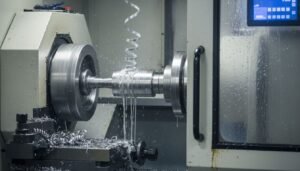
CNC turning works by holding a material block in a chuck. The machine spins the material at high speeds. A computer controls a cutting tool. The tool moves along the spinning material. The tool cuts away material to form the final shape.
The Core Process
I started my career in a mold factory. I saw many machines. Old NC machines used punch cards. Today, CNC machines[^2] use digital files. This change makes a huge difference. CNC turning is different from CNC milling. In turning, the part spins. In milling, the tool spins. You must know this difference. It saves you from making bad design choices.
Types of CNC Machines
You will find many types of CNC machines in a shop. We use them for different CNC parts machining tasks.
| Machine Type | How It Works | Best For |
|---|---|---|
| CNC lathe[^3] | Spins the part on one axis | Simple round parts |
| CNC Mill | Spins the tool around a fixed part | Flat or complex 3D parts |
| CNC Router | Cuts softer materials | Wood or plastic sheets |
You must know these differences. It helps you pick the right process. I have 25 years of experience as a CNC turning parts manufacturer. We make high-quality parts. You can get bulk custom parts from China linhardware. We use the best machines. We ensure your parts meet strict tolerances. We always check the machine settings before we start. This prevents errors. This saves material.
NC machines use modern digital CAD files.False
NC machines use older technology like punch cards, while CNC machines use digital files.
In CNC turning, the workpiece rotates.True
The defining feature of turning is that the material spins while the cutting tool remains stationary.
What Are the Types of CNC Turning Operations and Tools?
Do you use the wrong tool for your cuts? This mistake ruins expensive materials. I will show you the right operations and tools to use.
CNC turning includes many operations. You can do facing, turning, drilling, boring, threading, grooving, and knurling. Each operation uses specific tools. You might use a boring bar, parting tool, or drill bit. These tools shape the material accurately.
Common Turning Operations
You need to know the basic operations. Facing cuts the end of the part flat. Turning cuts the outside diameter. Drilling makes a hole in the center. Boring makes an existing hole bigger. Threading cuts screw threads. Grooving cuts a narrow channel. Knurling makes a rough pattern. This pattern gives a better grip. You must choose the right operation for your design.
CNC Turning Tooling Materials
You must match the tool to the job. Tools come in different shapes. They come in different materials.
| Tool Name | Operation | Common Material |
|---|---|---|
| Turning Tool | Outside cutting | Carbide |
| Boring Bar | Inside cutting | High-Speed Steel |
| Parting Tool | Cutting off parts | Carbide |
| Drill Bit | Making holes | Cobalt |
I always tell my clients to check their tools. A dull tool causes bad surface finishes. You must ensure safety and efficiency in CNC turning operations[^4]. You must always check tool wear. You must always use coolant. This keeps the tools sharp. This keeps the parts accurate. A sharp tool also reduces the stress on the machine. This makes the machine last longer.
Boring is used to create a brand new hole in solid material.False
Drilling creates the initial hole, while boring enlarges an existing hole.
Carbide is a common material for CNC turning tools.True
Carbide is very hard and withstands high temperatures, making it ideal for cutting tools.
CNC Lathes vs. CNC Turning Centers: What is the Difference?
Are you unsure which machine to book for your parts? Picking the wrong machine wastes time and money. I will compare lathes and turning centers for you.
A CNC lathe is a simpler machine. It has two axes for basic turning. A CNC turning center is more advanced. It has extra axes. It has live tooling. It can mill and drill in one setup.

Machine Components and Axes
You need to understand the machine parts. CNC turning machine components include the chuck, spindle, turret, and bed. What are the machine axes in a CNC turning center? A basic lathe has an X-axis and a Z-axis. The Z-axis moves along the part length. The X-axis moves across the part diameter. A turning center adds a C-axis or Y-axis. This allows the machine to do milling work. It does this while the part is still in the chuck. This saves a lot of setup time.
Horizontal vs. Vertical Machines
You also have to choose the machine orientation.
| Machine Type | Spindle Direction | Best For |
|---|---|---|
| Horizontal CNC Lathe | Sideways | Long, lightweight parts |
| Vertical CNC Lathe | Up and down | Heavy, large, short parts |
I remember a client. He struggled with heavy parts on a horizontal lathe. Gravity pulled the parts down. We switched his parts to a vertical CNC lathe. The problem disappeared. You must match the machine to the part weight. You must match it to the part size. This prevents safety issues. This ensures a perfect cut every time.
A basic CNC lathe has five axes.False
A basic CNC lathe typically has only two axes: X and Z.
Vertical CNC lathes are better for heavy parts.True
Vertical lathes use gravity to help hold heavy parts securely in the chuck.
How Do You Design Parts for CNC Turning?
Do your designs fail during production? Bad designs cause delays and stress. I will share simple design rules to make your parts easy to turn.
You must keep the shape round to design parts for CNC turning. You must avoid sharp inside corners. You must use standard thread sizes. You must choose the right material. This ensures your part is a good fit for CNC turning. It keeps costs low.

Is My Part a Good Fit?
You must ask if your part is a good fit for CNC turning. The answer is yes if the part is round. Shafts and bushings are good examples. You need a mill if it is a flat box. You must design parts with the machine in mind. You must add radii to inside corners. The cutting tool is round. It cannot cut a perfectly sharp inside corner. You will save money if you follow this rule.
Materials and Tools
What material is suitable for CNC turning? You can turn almost anything. Which tool or design works best for which material?
| Material | Machinability | Best Tool Material |
|---|---|---|
| Aluminum | Very High | High-Speed Steel or Carbide |
| Stainless Steel | Medium | Coated Carbide |
| Plastics | High | Sharp High-Speed Steel |
I work with many product designers. They often ask me about material choices. Aluminum is great for prototypes. It cuts fast. Stainless steel is harder. It takes more time. You must pick the material based on your final product needs. You must also think about the tool cost. Hard materials wear out tools faster. This increases your final price.
CNC turning tools can easily cut perfectly sharp inside corners.False
Turning tools have a radius, so they leave a small curve on inside corners.
Aluminum is highly machinable in CNC turning.True
Aluminum is soft and easy to cut, making it a very popular choice for CNC turning.
What Are the Applications and Economics of CNC Turning?
Are you worried about the final cost of your parts? High prices kill good products. I will explain the costs and benefits of CNC turning.
CNC turning is cost-effective for prototypes. It is cost-effective for large-scale production. People use it in automotive, aerospace, and medical industries. It makes shafts, connectors, and fasteners. The process takes minutes to hours. This depends on complexity.
Time and Cost Factors
Is CNC turning expensive? It depends. Economic factors in CNC turning include setup time, material cost, and machine time. How long does a typical CNC turning process take? It ranges from minutes to hours. You can select a local manufacturing option for time-sensitive projects. They offer lead times from 5 days. Or, you can order bulk custom parts from China linhardware. This saves you money. We offer great prices for large orders.
Production Scale and Limits
Is CNC turning suitable for prototypes or large-scale production? It works well for both.
| Production Type | Setup Cost per Part | Speed |
|---|---|---|
| Prototype (1-10 parts) | High | Fast |
| Large-Scale (1000+ parts) | Low | Very Fast |
What kind of parts can you make with CNC turning machines? You can make valves. You can make fasteners. You can make medical devices. But there are limitations of CNC turning. You cannot easily make non-round shapes. You need a turning center for that. You must know these limits. I always help my clients balance cost and design. This gets the best results. This makes your project successful.
CNC turning is only used for making prototypes.False
CNC turning is highly efficient for both prototypes and large-scale mass production.
Setup time affects the total cost of CNC turning.True
The time it takes to program the machine and set up the tools is a major economic factor.
Conclusion
CNC turning is a fast way to make round parts. It is very reliable. You can reduce costs and improve quality. You just need to understand the machines and rules.
References
[^1]: Understanding CNC turning is crucial for optimizing production and reducing costs in manufacturing.
[^2]: Exploring the various CNC machines helps in selecting the right one for specific machining tasks.
[^3]: Knowing the specifics of CNC lathes can enhance your machining efficiency and part quality.
[^4]: Familiarity with CNC turning operations ensures the right tools and techniques are used for each project.